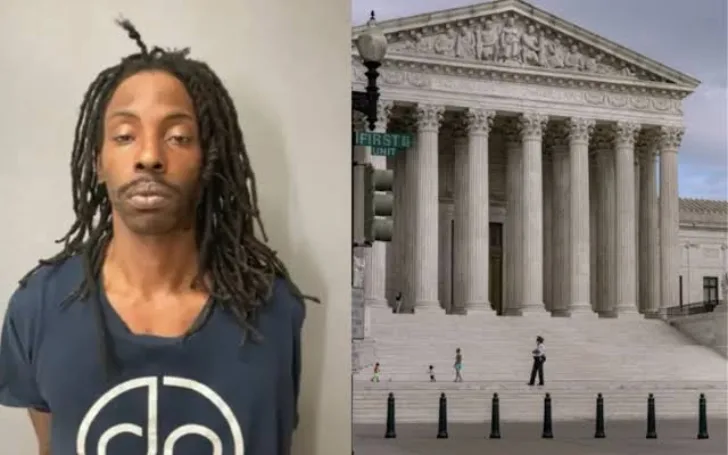
Shamell Naquan Joyner is a Washington, D.C., man who was convicted in August 2026 on 13 federal counts connected to a string of armed robberies and a carjacking. His unusual trial attracted national attention after jurors discovered a white powdery substance and Chinese currency hidden inside clothing that had been submitted as evidence but apparently had never been fully searched.
Joyner had originally faced 28 federal counts stemming from robberies and carjackings authorities said occurred across Washington, D.C., Maryland and Virginia in 2023.
Interest in Joyner’s personal life, including questions about his wife and parents, grew after the bizarre circumstances surrounding his trial made national headlines.
What Did Shamell Naquan Joyner Do?
Joyner was accused of carrying out a series of armed robberies during a roughly three-week period between April 12 and May 2, 2023.
According to the U.S. Attorney’s Office for the District of Columbia, prosecutors ultimately accused him of 10 armed commercial robberies and two armed carjackings.
The businesses targeted included several 7-Eleven stores and gas stations across the Washington metropolitan area.
Prosecutors said Joyner used a gun during the crimes.
In one April 2023 robbery at a Falcon Fuel gas station in Washington, prosecutors alleged that he fired toward two employees, although neither was hit.
Days later, during the robbery of a 7-Eleven in Alexandria, Virginia, a store employee was shot in the leg and suffered a non-life-threatening injury.
Authorities also accused Joyner of stealing vehicles at gunpoint.
One of those incidents allegedly involved a Honda HR-V that was taken in Washington before being driven across state lines and used during subsequent robberies.
How Was Shamell Joyner Caught?
Joyner’s alleged robbery spree came to an end on May 2, 2023.
That day, prosecutors said an employee at an Exxon station in Maryland was held at gunpoint and had the keys to his Toyota RAV4 taken.
Police later found Joyner sitting in the driver’s seat of that stolen vehicle in southeast Washington, according to the Justice Department.
He was arrested without incident.
Authorities said they also recovered a firearm and distinctive clothing that investigators believed connected him to multiple robberies.
Joyner remained detained following his arrest.
Shamell Joyner Was Convicted on 13 Counts
The case finally went to trial in 2026.
After a monthlong federal trial and several days of deliberations, jurors convicted Joyner on 13 of the 28 counts against him.
The jury could not unanimously decide the remaining 15 counts, which involved allegations connected to additional robberies and a carjacking.
The convictions were enough to expose Joyner to a mandatory minimum of 31 years in federal prison, according to reporting citing the U.S. Attorney’s Office.
That is a significant distinction from the potential punishment discussed when he was initially indicted. In 2024, prosecutors said convictions on the entire 28-count indictment could have triggered a much longer mandatory minimum.
The Strange Evidence Discovery During Joyner’s Trial
The reason the Shamell Joyner trial suddenly became a much bigger national story had little to do with the original robberies.
It was what the jurors themselves found inside the evidence.
During deliberations, a juror reportedly reached into the pocket of a jacket that had been admitted into evidence and found a folded piece of paper containing a suspicious white substance.
A separate piece of clothing contained Chinese yuan.
Apparently, neither police, prosecutors nor Joyner’s lawyers had previously realized the objects were inside the clothing.
U.S. District Judge Rudolph Contreras questioned the jurors individually afterward.
They were instructed not to consider the newly discovered items when determining Joyner’s guilt because the objects had not properly been introduced as evidence during the trial.
The episode produced unusual scrutiny of how authorities had handled the physical evidence in such a serious federal criminal case.
Does Shamell Naquan Joyner Have a Wife?
There is no reliable public information confirming that Shamell Naquan Joyner is married or identifying a wife.
Major reporting about his arrest, federal indictment and 2026 trial focuses almost entirely on the criminal case.
The Justice Department’s records identify Joyner as a Washington, D.C., resident but do not list a spouse.
That does not necessarily mean Joyner has never been married. It simply means his marital status has not been established by reliable public reporting.
Claims naming a supposed Shamell Joyner wife should therefore be treated cautiously unless supported by court records or another credible source.
Who Are Shamell Naquan Joyner’s Parents?
The identities of Shamell Joyner’s mother and father have also not been publicly established in credible reporting surrounding the case.
Neither the federal indictment nor major reports on his trial provide names for his parents.
Joyner is not a celebrity or public official whose family background had been documented before his arrest.
Most of what is publicly known about him comes directly from police records and the federal criminal proceedings.
How Old Is Shamell Naquan Joyner?
Federal prosecutors described Joyner as 36 years old in August 2024.
That would place him at approximately 38 years old in 2026, depending on his exact birthday.
His precise date of birth has not been prominently reported by credible national sources.
Where Is Shamell Joyner From?
Joyner is from Washington, D.C.
Federal authorities repeatedly described him as a resident of the District of Columbia when announcing the charges against him.
His alleged crimes, however, extended beyond the District into nearby parts of Maryland and Virginia.
What Happens to Shamell Joyner Now?
Joyner has been convicted on 13 counts, but his case was unusual because jurors remained deadlocked on the other 15 charges.
The convictions already carry severe federal prison exposure, including a reported 31-year mandatory minimum sentence.
The unresolved counts could also lead to additional decisions by federal prosecutors.
For now, however, Joyner’s name is attracting attention not only because of the violent robbery case but because of the extraordinary evidence-handling mistake discovered by the jury itself.
